
Published June 18, 2026
Navigating Financial Assistance and Homebuyer Programs in Anchorage, AK in 2026

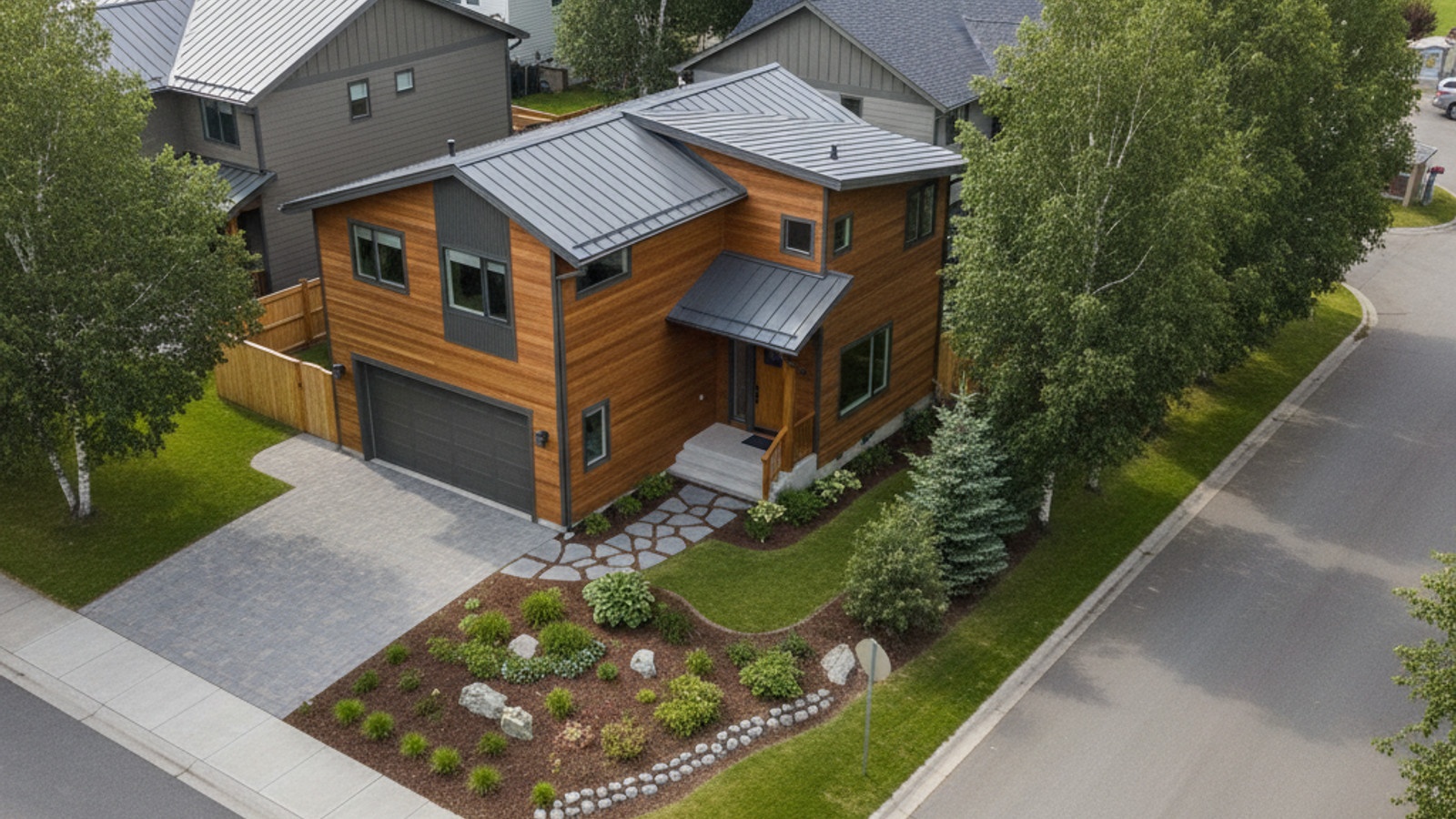
Entering the local real estate market requires strategic planning, especially with the 2026 Anchorage median list price hovering around $459,950. Buyers often find that saving for a down payment is the largest hurdle to securing a property in the area. Fortunately, state and local organizations step in to close this affordability gap for residents.
Exploring financial assistance and homebuyer programs in Anchorage, AK can completely change your purchasing timeline. The two major entities driving these initiatives are the Alaska Housing Finance Corporation (AHFC) and NeighborWorks Alaska. Pairing their local assistance funds with standard loan types provides a clear path to homeownership for moderate-income buyers.
Alaska Housing Finance Corporation (AHFC) Programs
The Alaska Housing Finance Corporation serves as the primary backbone for state-level mortgage support. Their mission centers on providing secure, reduced-rate financing options for residents across the state. They do not originate the mortgages directly, but rather work through a network of approved local lenders.
Working with an AHFC-approved lender ensures that your application automatically gets screened for these specialized state funds. Buyers who leverage these options often secure monthly payments that are significantly lower than standard market rates. This approach maximizes your purchasing power without requiring you to drain your savings account.
First Home and First Home Limited Loans
The First Home program specifically targets first-time buyers by offering a reduced interest rate on the primary mortgage. Buyers who have not owned a primary residence in the past three years generally meet the foundational criteria for this option. This reduction translates directly into hundreds of dollars saved on monthly housing expenses.
For those needing even lower rates, the First Home Limited program utilizes tax-exempt bonds to drive borrowing costs down further. This option comes with strict limits, capping eligible Anchorage buyers at a gross income of $129,000 for a one-to-two-person household. Borrowers in lower brackets might also qualify for the Interest Rate Reduction for Low Income Borrowers, adding another layer of affordability.
Affordable Housing Enhanced Loan Program (AHELP)
AHELP functions by partnering AHFC with local agencies to provide essential down payment assistance. This secondary financing steps in when buyers have the income to support a monthly payment but lack the upfront cash to close. The funds can take several forms, including straightforward grants, deferred payments, or forgivable loans.
Accessing AHELP requires a commitment to understanding the financial responsibilities of owning a property. Applicants must complete an approved homebuyer education class before the closing date. This educational step ensures borrowers are fully prepared for the long-term realities of property taxes, maintenance, and mortgage management.
NeighborWorks Alaska and Local Grants
While AHFC handles state-level mortgage products, NeighborWorks Alaska delivers critical community-level support directly to Anchorage residents. This organization focuses heavily on neighborhood revitalization and direct buyer assistance. They manage localized grant pools that help buyers overcome the initial financial barriers of real estate transactions.
Relying on a local entity like NeighborWorks means you get access to specialized funds tailored to the exact economic conditions of the municipality. Their programs are designed to stack alongside your primary mortgage, reducing the total amount of cash you need to bring to the closing table. Securing these local funds often makes the difference between continuing to rent and finally purchasing a home.
The Home Opportunity Program (HOP)
The Home Opportunity Program is one of the most impactful tools managed by NeighborWorks Alaska for lower-income purchasers. It targets households earning 80 percent or less of the Area Median Income as defined by the United States Department of Housing and Urban Development. Qualified buyers receive substantial upfront capital structured specifically to ease the transition into homeownership.
HOP provides specific financial benefits that directly reduce upfront costs:
- A zero-interest loan structure dedicated entirely to covering the down payment.
- Up to $10,000 in assistance that is conditionally forgiven over a five-year period of owner-occupancy.
- An additional allocation of up to $3,000 specifically earmarked for closing cost assistance.
Objective Eligibility Requirements in Anchorage
Every assistance initiative operates within strict financial guardrails to ensure funds reach the buyers who truly need them. Lenders will heavily scrutinize your financial background before approving any specialized grants or reduced-rate loans. Understanding these benchmarks before you apply prevents wasted time and helps you set realistic property expectations.
Approval hinges on two main categories: your personal financial health and the specific characteristics of the property you intend to buy. The guidelines vary slightly between different agencies, but they all rely on verified tax returns, recent pay stubs, and comprehensive property appraisals. Buyers must perfectly align their financial profile with the property type to successfully secure the funding.
Income Limits and Credit Score Minimums
Local programs rely heavily on the Area Median Income to determine who gets funding. In Anchorage, the 80 percent AMI threshold sits at approximately $94,400 for a household of four in 2026. Conversely, the AHFC First Home Limited program allows for a higher ceiling, permitting up to $129,000 for a one-to-two-person household.
Your credit history dictates exactly which primary loan you can pair with these assistance funds. Standard Federal Housing Administration pairings typically require a minimum credit score of 580 to qualify for the low 3.5 percent down payment. Buyers with scores between 500 and 579 might still qualify, but they will face a steeper 10 percent down payment requirement.
Always pull and review your credit report well before submitting an official application. Correcting minor errors early can boost your score enough to unlock significantly better interest rates.
Eligible Properties and Purchase Price Limits
Assistance funds cannot be used to purchase investment rentals or commercial real estate. The property must serve as your primary residence for the duration of the compliance period. Buyers have several structural options when selecting a qualifying property in the municipality.
Eligible properties generally fall into the following categories:
- Standard single-family homes situated within the local zoning boundaries.
- Approved condominiums that meet the specific lending guidelines of the backing agency.
- Multi-unit properties, such as a duplex, provided the buyer occupies one of the units.
Additionally, the home must fall under the maximum acquisition cost limits set for the region. For most single-family properties in Anchorage, the 2026 FHA loan limit caps out at $541,287.
Pairing Assistance with Standard Mortgages
State and local down payment assistance functions as a second mortgage or deferred loan positioned behind your primary mortgage. You still need to qualify for a traditional first mortgage through a bank or mortgage broker. The assistance simply covers the required down payment or closing costs that the primary lender mandates.
FHA loans remain incredibly popular for this pairing due to their lenient credit requirements and low 3.5 percent minimum down payment. Eligible military veterans can leverage VA loans for a zero down payment structure, utilizing the local assistance funds purely to cover closing fees. This strategy effectively eliminates almost all out-of-pocket expenses at the closing table.
Buyers interested in properties on the outskirts of the municipality might look into USDA Rural Development loans. While some remote areas in AK qualify for these zero-down USDA products, buyers must verify the specific Anchorage municipality zoning boundaries. Working with a local housing counseling agency ensures you structure this financing effectively and choose the right loan pairing.
Frequently Asked Questions
What is the Alaska Home Opportunity Program (HOP)?
The Home Opportunity Program provides down payment and closing cost assistance to lower-income buyers in the state. It features a zero-interest loan of up to $10,000 that is conditionally forgiven over five years of continuous occupancy. Buyers also receive up to $3,000 to help cover standard closing fees.
Who qualifies for the $25,000 first-time homebuyer grant in Anchorage?
There is no single $25,000 blanket grant for Anchorage buyers, but residents can stack local and federal programs to reach similar assistance levels. Qualification requires meeting strict income limits, typically around 80 percent of the area median income, which is roughly $94,400 for a four-person household. Applicants must also complete a certified homebuyer education course.
Does the government provide financial assistance to move to Alaska for homebuyers?
The government does not pay individuals or provide moving grants simply to relocate to the state. However, permanent residents do receive the annual Alaska Permanent Fund Dividend after establishing a full calendar year of residency. Genuine homebuyer assistance is strictly reserved for purchasing a primary residence once you already live here.