
Published June 18, 2026
Moving to the Last Frontier: A 2026 Guide to Living in Anchorage, AK

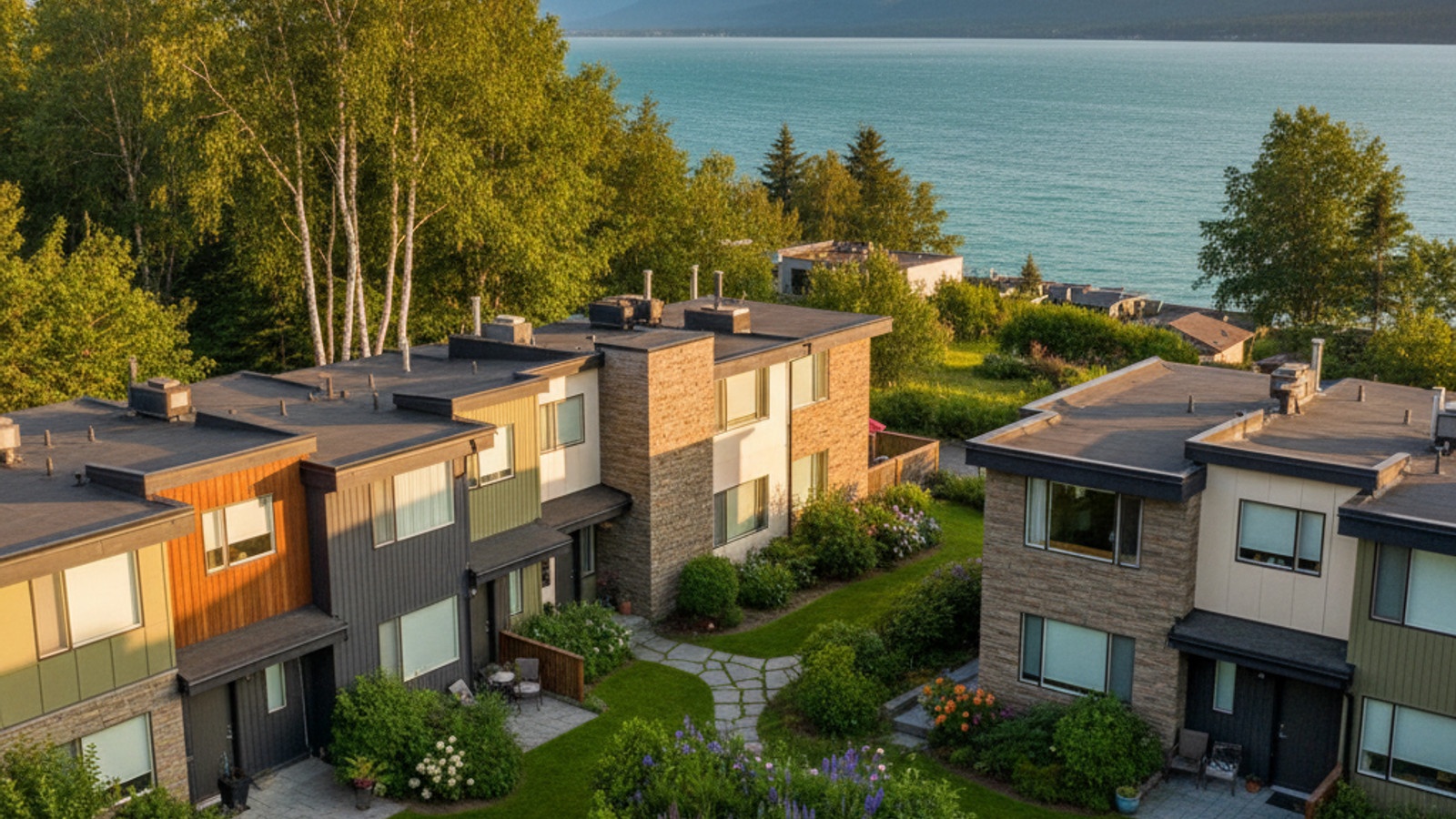
Relocating to Alaska requires a clear understanding of the environment, the economy, and the local housing market. Anchorage serves as the primary economic hub of the state, blending urban infrastructure with immediate access to vast wilderness. Buyers evaluating a move here often weigh the balance between unique environmental factors and standard urban amenities.
Residents experience extreme seasonal shifts, from the midnight sun delivering endless hours of daylight in the summer to the prolonged snow and ice of the winter months. Understanding these local realities is essential for anyone considering living in Anchorage, AK this year.
The Financial Reality of Living in Anchorage, AK
Evaluating the cost of living in this city requires looking beyond just the sticker price of consumer goods. Because nearly all freight arrives by barge or air, everyday items at the grocery store typically cost more than they do in the lower 48 states. However, the local tax structure provides a significant counterbalance to these elevated daily expenses.
Alaska famously levies no state income tax, allowing workers to keep a larger percentage of their gross earnings. Property owners in the municipality face an effective property tax rate of approximately 1.22% for the 2025/2026 tax cycle.
This lack of state income tax remains one of the strongest financial incentives for relocating workers.
Median Home Value in Anchorage and Property Types
The current median home value in Anchorage ranges between $400,000 and $460,000. Buyers will find a mix of architectural styles, spanning from mid-century single-family homes to modern townhouse developments built over the last decade. The market moves at a steady pace, with average days on market hovering around 33 to 36 days in early 2026.
Understanding this timeline is crucial for buyers planning a relocation schedule. Properties priced accurately and located near major employment centers tend to see strong offer ratios. Having financing secured before touring properties remains a strict necessity in this housing landscape.
Average Rental Rates and Lease Availability
Securing a lease before purchasing a home is a common strategy for newly arrived residents. The average monthly rental rate for a standard apartment currently sits between $1,300 and $1,500. Studio apartments generally fall at the lower end of this spectrum, while two-bedroom units command higher premiums depending on proximity to major transit routes.
Renters occupy roughly 36% of the Anchorage housing market, creating steady demand for multi-family units and single-family rentals alike. This solid tenant base means well-maintained rental properties rarely sit vacant for long. New arrivals should expect standard background checks and security deposits equal to one month of rent.
Major Employment Hubs and Daily Commutes
The local economy relies heavily on a few massive institutional and corporate anchors. Joint Base Elmendorf-Richardson, commonly known as JBER, serves as a primary economic and demographic driver for the entire region. Military personnel and civilian contractors form a substantial portion of the daily workforce commuting through the northern corridors.
Healthcare represents another massive sector of job opportunities in the municipality. Providence Alaska Medical Center and the Alaska Native Medical Center employ thousands of medical professionals, administrators, and support staff. Meanwhile, downtown Anchorage functions as the central hub for corporate operations, municipal administration, and the oil and gas industry.
Navigating the daily commute depends largely on which highway serves your residential sector. The Glenn Highway facilitates northbound traffic toward Eagle River, while the Seward Highway handles southbound routes toward the Hillside areas. Commute times remain highly variable during the winter months, as snow and ice conditions frequently dictate travel speeds.
Anchorage School District: Objective Data and Programs
The Anchorage School District operates as one of the largest public education systems in the nation by geographic footprint. The district manages dozens of facilities, offering a wide variety of specialized academic and vocational pathways. These structured programs provide distinct educational tracks depending on a student's focus and residential zoning.
West High School hosts the International Baccalaureate program, delivering a globally recognized curriculum for enrolled students. Service High School features the Biomedical Career Academy, which focuses on early preparation for healthcare and medical fields. Both programs require specific enrollment steps and maintain structured academic prerequisites.
Vocational and alternative training options are also heavily integrated into the district's offerings. King Tech High School provides hands-on technical training across various trades and industries. Additionally, S.A.V.E. High School offers alternative educational environments designed to support diverse learning requirements.
Exploring Distinct Residential Areas in Anchorage
The residential zoning across the municipality features immense geographic diversity. Lot sizes, architectural styles, and elevation vary drastically depending on the specific neighborhood. This layout means that a property's location directly dictates its proximity to essential services, highway access, and recreational trailheads.
Buyers must weigh their desire for acreage against their need for a rapid commute to central employment centers. Properties located in the dense urban bowl offer immediate access to infrastructure but generally feature smaller lot sizes. Conversely, homes positioned at higher elevations provide expansive views but require longer drives to reach a grocery store or medical facility.
South Addition: Downtown Proximity
South Addition sits immediately adjacent to the downtown commercial core. The neighborhood features smaller lot sizes and a high concentration of historic property types dating back to the city's early development. Residents here benefit from walking distance to urban amenities, including the Anchorage Museum and central dining districts.
The infrastructure in this area prioritizes pedestrian access and grid-style street layouts. Access points to the coastal trail are easily reachable, providing immediate recreational opportunities. This proximity to both corporate offices and green spaces drives consistent demand for homes in the area.
Turnagain: Coastal Access and Mid-Century Properties
The Turnagain neighborhood occupies a western coastal position within the city limits. Mid-century single-family homes dominate the architectural landscape here, often featuring established landscaping and standard suburban lot layouts. The area provides a short, direct drive to the Ted Stevens Anchorage International Airport.
Direct access to the coastline and Earthquake Park serves as a major feature of this residential zone. The nearby Spenard Road commercial districts offer a variety of retail and dining options. Buyers focusing on this area typically prioritize established streetscapes over new construction.
Anchorage Hillside: Elevated Lots and Mountain Access
The Anchorage Hillside area features lower-density zoning and significantly larger property footprints. Custom-built home styles sit on multi-acre lots, taking advantage of the elevated terrain to capture expansive city and inlet views. This elevation directly abuts Chugach State Park, providing immediate access to extensive mountain trailheads.
The trade-off for this space is an increased distance to central amenities like Providence Alaska Medical Center and major retail centers. The steep, winding roads require specific winter driving preparations, including studded tires and all-wheel drive vehicles. Managing snow removal on long, private driveways is a standard reality for residents in this zone.
Parks, Trails, and Outdoor Recreation Amenities
The municipal and state park infrastructure accessible within the city limits is unmatched by most urban centers. Outdoor activities are deeply woven into the local culture, shifting seamlessly from summer hiking to winter cross-country skiing. Residents maintain a strong connection to the surrounding wilderness, with many engaging in traditional practices of living off the land through seasonal hunting and fishing.
The 11-mile Tony Knowles Coastal Trail serves as a primary recreational artery connecting multiple residential areas. This paved path winds along the inlet, offering stunning water views and routine wildlife viewing opportunities. Moose frequently wander through city limits and along these trails, requiring residents to understand and practice strict wildlife safety guidelines.
Kincaid Park anchors the western edge of the city with an extensive trail system utilized year-round by runners, cyclists, and skiers. On the eastern boundary, Chugach State Park provides hundreds of thousands of acres of alpine wilderness. For those willing to drive just outside the city, striking glacier views and ice climbing opportunities are easily accessible.
Frequently Asked Questions About Living in Anchorage, AK
Is Anchorage, Alaska a good place to live?
Anchorage offers a unique blend of urban employment opportunities and immediate access to vast wilderness areas. The city provides robust healthcare and military job sectors alongside extensive outdoor recreational infrastructure. Relocators who value environmental diversity and can adapt to the subarctic climate generally find it a highly rewarding location.
What is the cost of living in Anchorage, AK?
The overall cost of living runs higher than the national average due to the expense of importing goods and groceries. However, residents benefit from the absence of a state income tax and a relatively stable 2026 property tax rate of roughly 1.22%. With median home values currently sitting around $400,000 to $460,000, housing remains accessible compared to many major West Coast markets.
What is the weather like in Anchorage, Alaska?
The city features a subarctic climate characterized by long, cold winters and mild, brief summers. Residents experience dramatic shifts in hours of daylight, ranging from the midnight sun during the summer solstice to limited twilight in December. Proper preparation for prolonged snow and ice is essential, though clear winter nights frequently offer spectacular views of the northern lights.
What is the job market like in Anchorage, AK?
The local economy is heavily supported by massive institutional employers like JBER and the Providence Alaska Medical Center. Downtown Anchorage serves as the operational center for the state's oil and gas industry, as well as municipal administration. These core sectors provide steady employment opportunities and drive consistent housing demand across the region.