
Categories
Anchorage AKPublished August 14, 2026
The Job Market and Lifestyle for Young Professionals in Anchorage, AK

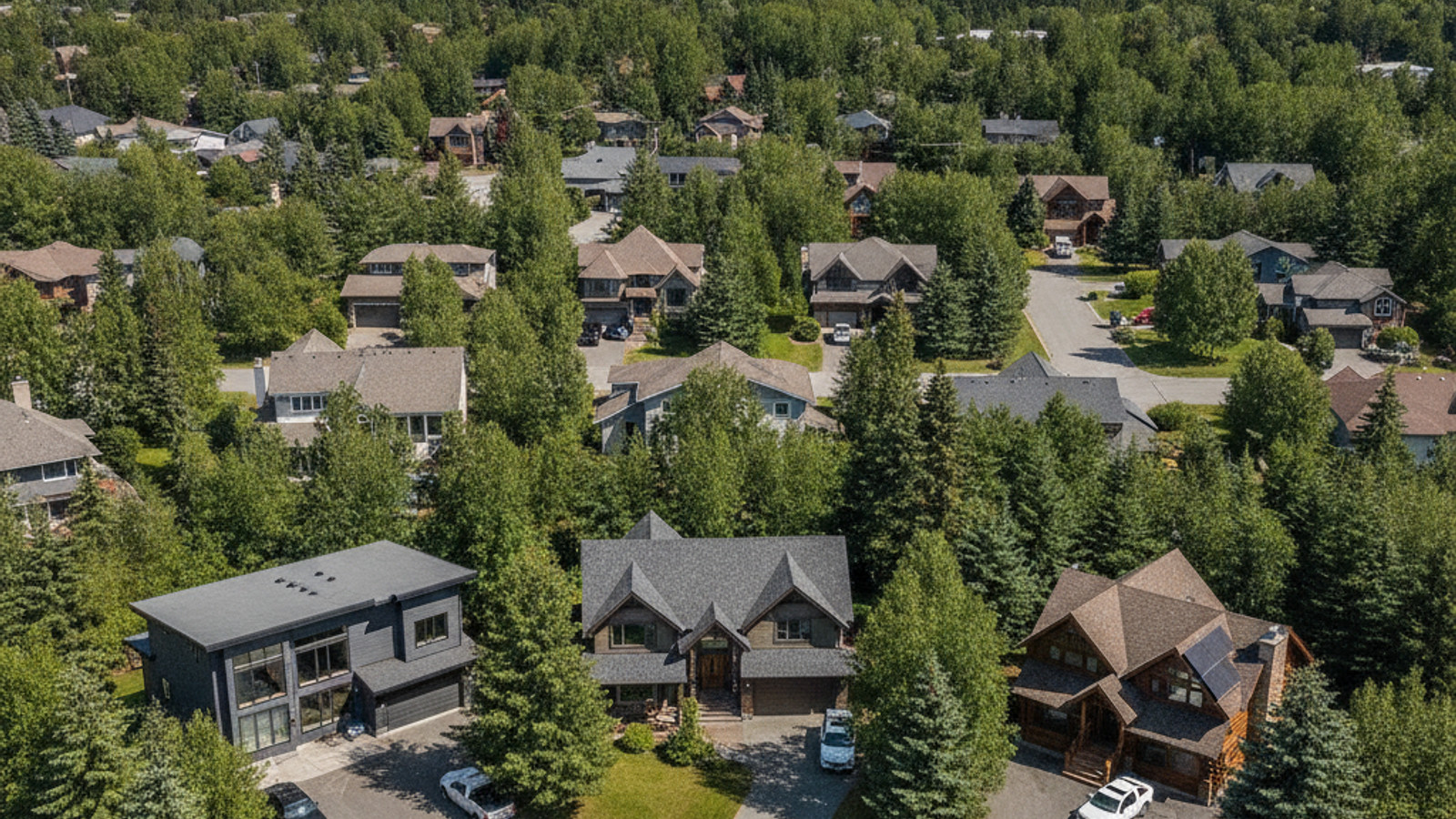
Living in Anchorage is genuinely unlike anywhere else you'll land a job in the United States. The career landscape mixes major corporate names, government work, and military-adjacent employment - and the outdoor access you get in exchange is something no city in the lower 48 can match. The real estate market moves fast: median home sale price sits around $455,500, and homes are going under contract in just 9 days. For renters, the median monthly cost across all property types is roughly $1,750 as of mid-2026.
If you're transferring for a role in healthcare, aviation, or energy, knowing what housing actually costs here - and understanding what it means to commute through a subarctic winter - will tell you more about whether this city fits your life than any job listing will.
What to Expect From the Local Job Market and Economy
The local economy runs on healthcare, government, energy, and aviation. The State of Alaska and the Municipality of Anchorage together account for a significant share of public-sector employment, and U.S. Army Alaska (JBER) is a major economic driver for the whole region.
On the private side, healthcare dominates. Providence Health & Services, Southcentral Foundation, and the Alaska Native Tribal Health Consortium each employ thousands of people. Corporate and technical roles tend to cluster around ConocoPhillips Alaska, GCI Communications, and Alaska Airlines. Large retail operations - Walmart, Sam's Club, Carrs/Safeway, Fred Meyer - round out the picture.
Balancing Income With Living Costs
Zumper data from May 2026 puts the median rent at $1,750 across all bedroom counts, which runs about 10% below the national average. Other platforms like RentCafe and Apartments.com report slightly lower averages, usually because they're pulling from a different mix of property types or older inventory.
The purchase market is a different story. The median sale price of $455,500 reflects a 3.5% year-over-year increase. There are only 345 homes actively listed and a 1.3-month supply of inventory. Close to 40% of homes sell above asking price. If you're planning to buy, be ready to move - not almost ready.
Social Life and Entertainment
Downtown Anchorage is where most of the nightlife and entertainment concentrates. You've got historic buildings, a solid cluster of hotels, and venues like Tent City Taphouse. The Alaska Center for the Performing Arts anchors the arts scene, with concerts and theater running through the year.
Outside of downtown, Spenard is where a lot of locals actually spend their evenings - it's developed a real collection of breweries and restaurants worth knowing about.
Top Anchorage Neighborhoods to Consider
This is a car-dependent city. Neighborhood choice here isn't just a lifestyle preference - it directly determines how long you're in the car every day. Anchorage spans a wide range of districts, from urban pockets to quieter suburban areas like Hillside or Bear Valley, and that distance matters when it's dark at 4 p.m. and the roads are glazed over.
A handful of specific areas do offer denser layouts where you can walk to errands and restaurants. If limiting your driving outside work hours is a priority, those neighborhoods are worth narrowing to first.
Walkable and Nightlife-Oriented Areas
Downtown Spenard is the most walkable neighborhood in the city - Walk Score of 87. It blends residential blocks with commercial space, and day-to-day errands are genuinely manageable on foot. The main Downtown district follows at a Walk Score of 80, with the highest concentration of bars, restaurants, and entertainment venues in the metro. Evergreen is another walkable pocket worth a look if you want something a bit quieter while still staying close to the central business district.
Affordable and Emerging Districts
For renters watching their monthly costs, Russian Jack Park has some of the lowest rates in the city - one-bedroom apartments average around $1,255. Northstar and Abbott Loop are close behind, with one-bedrooms typically running $1,280 and $1,295, respectively.
Spenard is widely considered the city's up-and-coming area - it's transitioning into more of a bohemian arts and food district, with new breweries and restaurants driving that shift. Mountain View, Fairview, and parts of Muldoon are also seeing revitalization efforts, though they're earlier in that process.
Comparing Rent Prices Across the Metro
The citywide average for a one-bedroom in Anchorage is approximately $1,320, but that number hides a pretty wide range depending on where you land and what's included in the building.
Midtown and Independence Park sit right near that citywide average, with one-bedrooms running $1,295 to $1,300. Airport Heights comes in a touch higher at around $1,349. Downtown apartments typically ask about $1,400 per month.
Higher-Priced Rental Markets
Head south or toward the coast and costs go up. Campbell Park averages $1,465 for a standard one-bedroom. Bayshore-Klatt is similar, with one-bedrooms around $1,450. Sand Lake is the most expensive rental market for one-bedrooms in the city, with average rates reaching approximately $2,000 per month.
Entering the Buyer's Market
With homes sitting on the market for an average of just 9 days and a sale-to-list ratio of 100.6%, this isn't a market where you schedule a second showing to think things over. Get your financing fully approved before you start touring - not during.
For buyers who want a more accessible entry point, townhomes and condos in areas like Turnagain or South Addition tend to be more realistic than detached single-family houses when inventory is this tight.
Practical Tips for Your Relocation
Own a car. That's not optional for most people here. Many employers either prefer or outright require candidates who can drive, and the public transit network won't cover the gaps. Beyond getting to work, winter adds genuine costs - extra driving time, maintenance, and fuel - that new arrivals consistently underestimate until they're living it.
Where you choose to live should be shaped by your commute just as much as your rent.
Commuting and Public Transit
The People Mover bus network is the primary public transportation option. It serves major commercial corridors like Midtown along set routes, and it works reasonably well if you happen to live and work directly on one of those routes.
Most professionals drive, especially in winter when temperatures drop and daylight hours shrink. The system doesn't provide comprehensive coverage across the metro, so if your job or apartment falls outside a served corridor, the bus isn't a real option.
Choosing the Right Location
South Addition, Rogers Park, and Airport Heights offer relatively central locations that keep daily drives manageable. Areas like Huffman/O'Malley, Basher, and Rabbit Creek give you more space, but the longer commutes into Downtown or Midtown add up - especially in January.
Before you sign a lease somewhere cheap and distant, run the math on vehicle maintenance, winter tires, and fuel. A lower rent figure in a far-out suburb can easily cost you more over a year than a pricier apartment closer in.
Frequently Asked Questions
What are the best neighborhoods in Anchorage for young professionals to buy a home?
South Addition, Rogers Park, and Turnagain are popular choices for buyers who want established areas close to the city center. If you're after more space, South Anchorage, Hillside, and Rabbit Creek come up often - just know you're trading location for square footage, and the commute reflects that.
Is it affordable to buy a house in Anchorage as a young professional on a single income?
It depends on your salary and what you're comfortable carrying. The median home price is roughly $455,500, homes frequently sell above asking price, and the average days on market is just 9. None of that makes single-income buying easy.
What industries are driving job growth for young professionals relocating to Anchorage?
Healthcare, government, and energy are the primary employment drivers. Providence Health & Services, ConocoPhillips Alaska, and the State of Alaska each supply a consistent stream of jobs across experience levels.
Should young professionals rent first or buy a home immediately when moving to Anchorage?
Renting first is the smarter move if you don't already know the city well. With a median rent of $1,750 and a purchase market that's both competitive and low on inventory, renting gives you time to understand the commute patterns and neighborhoods before you commit to a mortgage.
How does the Anchorage winter impact commuting and home maintenance for first-time buyers?
A personal vehicle becomes close to mandatory - the People Mover bus network has real coverage limitations. Budget for snow removal, winter tires, and higher heating costs. These aren't hypothetical line items; they're recurring expenses that catch people off guard.
Are there good condo and townhome options in Anchorage for young buyers who want to avoid snow removal?
Yes. Condos and townhomes in Downtown, Midtown, and Spenard are worth looking at. Many of these include exterior maintenance and snow removal in their homeowner association fees, which is a genuine quality-of-life consideration when you're looking at an Anchorage winter.

Annie Bjerkestrand
CEO, Listing Specialist, REALTOR® | Annie Bjerkestrand | RMG Real Estate
or another way