
Published June 18, 2026
Choosing Between Anchorage vs Mat-Su Valley, AK: A 2026 Buyer's Guide

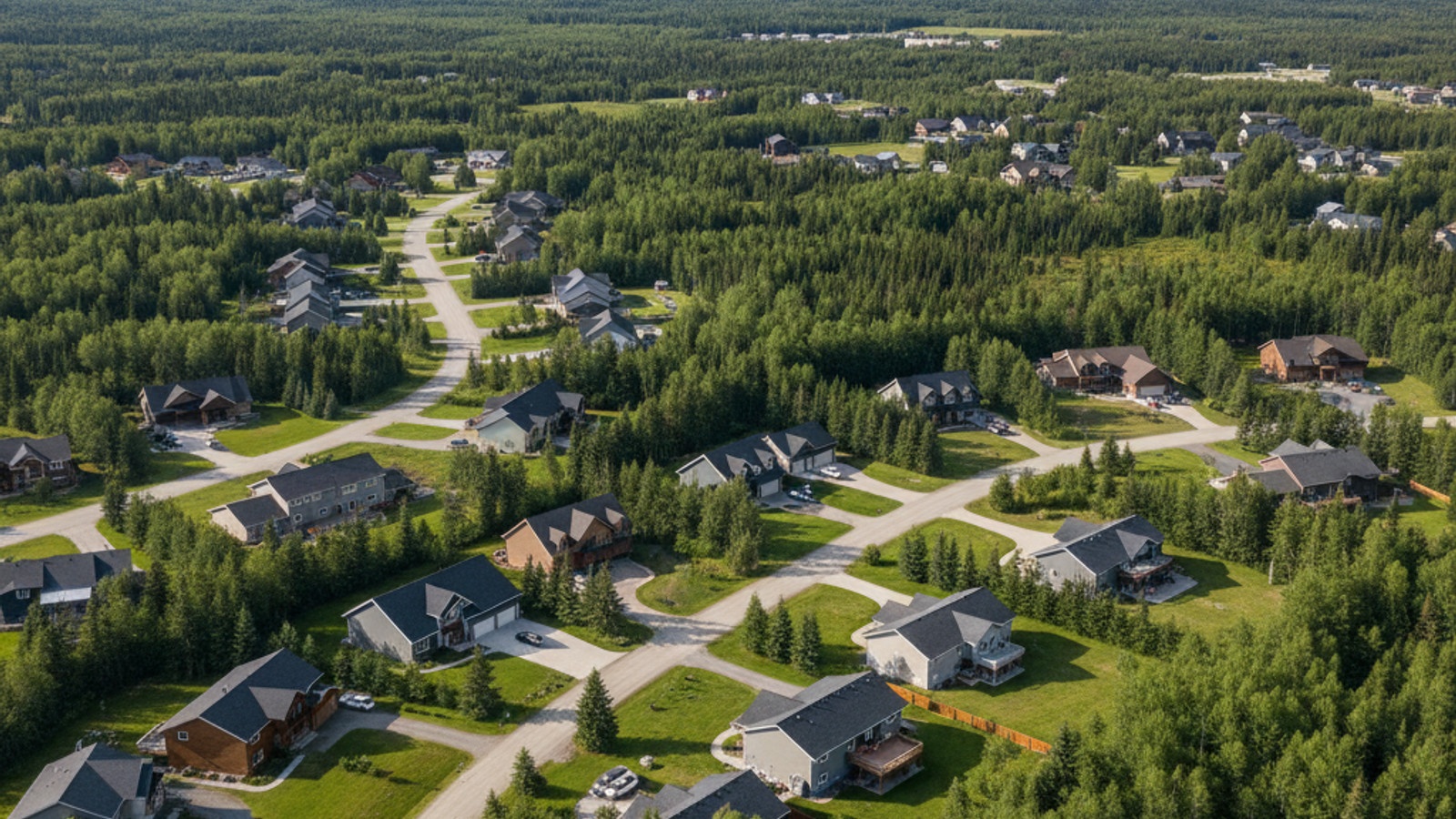
Deciding where to buy a home in Southcentral Alaska often comes down to choosing between the established municipal grid of Anchorage and the sprawling acreage of the Matanuska-Susitna Borough. Buyers moving to the state face a stark contrast in housing styles, daily commute logistics, and overall property costs between these two distinct hubs. Anchorage offers immediate access to major employment centers and urban amenities, while the Valley provides room to spread out.
Understanding the functional differences between these markets is critical for a successful relocation in 2026. The choice dictates not just the style of home you will purchase, but how much time you will spend driving on winter roads and what your annual property tax bill will look like. Weighing the trade-offs requires looking closely at current real estate data, infrastructure, and the daily realities of living in either location.
Anchorage vs. Mat-Su Valley: 2026 Relocation Overview
The geographic relationship between Anchorage and the Matanuska-Susitna Valley shapes the entire regional housing market. Anchorage sits on a peninsula bounded by the Chugach Mountains and the Cook Inlet, effectively capping its physical expansion.
Just to the north, the Mat-Su Borough spans a massive land area that continues to absorb the region's population growth. This spatial dynamic drives the primary choices buyers must make when entering the market. Purchasing in Anchorage means accepting a denser environment to keep commute times minimal and maintain proximity to urban amenities.
Opting for the Mat-Su Valley generally stretches a buyer's budget further regarding land, but it introduces a significant daily highway commute. New construction trends heavily favor the Valley right now due to this land availability. Builders are actively developing large subdivisions in Wasilla and Palmer, offering modern layouts that are increasingly rare within the Anchorage bowl.
Housing Density and Available Property Types
Anchorage operates with an established, densely built footprint that heavily influences the types of properties available. The municipal inventory includes a high concentration of condominiums, townhomes, and zero-lot-line properties. Single-family homes exist in abundance, but they typically sit on smaller urban lots of around 6,000 to 10,000 square feet.
The Mat-Su Valley presents a completely different housing landscape. In communities like Wasilla and Palmer, the standard property is a single-family home situated on an acre or more of land. This region caters directly to buyers who require space for outbuildings, recreational vehicle parking, or simply a larger buffer from adjacent properties.
The availability of new construction also sharply divides the two areas. Anchorage sees mostly infill development or tear-downs, meaning new homes are often integrated into older neighborhoods. Conversely, the Mat-Su Borough offers vast tracts of undeveloped land, making it the primary destination for buyers looking to build custom properties.
Real Estate Prices and Property Taxes in 2026
Evaluating the financial differences between these two markets requires looking at the total cost of homeownership. Buyers must factor in both the initial purchase amount and the ongoing property tax obligations. These carrying costs vary drastically depending on which side of the borough line a property sits.
Anchorage levies higher property taxes to fund its extensive municipal services, road maintenance, and public infrastructure. The effective property tax rate within the Anchorage Municipality currently hovers around 1.22% to 1.31%. This means a buyer purchasing a home for $400,000 will pay roughly $4,880 to $5,240 annually in property taxes.
The Mat-Su Borough generally offers a lighter tax burden, with effective rates closer to 0.84% to 0.99%. Buyers must pay close attention to whether a property is located inside or outside the city limits of Wasilla or Palmer. Homes outside the city limits often have lower mill rates, but they may lack municipal water or sewer connections.
Average Home Prices in Anchorage vs. Palmer and Wasilla
Median property values reveal distinct market realities across the region's main hubs. In Anchorage, the median home price sits at approximately $410,000, reflecting a heavy mix of smaller single-family units alongside more affordable condominiums. Palmer maintains a median price of roughly $435,000, driven by steady demand for its agricultural history and mountain views.
Wasilla currently commands the highest median price at approximately $537,000 to $566,000. This higher figure often surprises out-of-state buyers, but it directly reflects the massive share of expansive, newly constructed single-family homes on large lots. A buyer's budget ultimately dictates whether they secure a modern estate in the Valley or a centrally located home in Anchorage.
The Commute: Glenn Highway Traffic and Drive Times
The daily drive between the Mat-Su Valley and Anchorage is the single biggest logistical factor buyers must evaluate. The primary hubs of Wasilla and Palmer sit approximately 40 to 45 miles north of downtown Anchorage. The Glenn Highway serves as the sole major artery connecting these populations, creating a notorious bottleneck during peak travel hours.
Under clear weather conditions, a standard commute from the Valley into Anchorage takes about 45 to 60 minutes. Rush hour traffic volume predictably extends this window, especially where the highway narrows near Eagle River.
Winter weather drastically alters this daily reality. Heavy snowfall, ice, and highway accidents frequently stall traffic on the Glenn Highway for extended periods. Buyers choosing the Valley must be prepared for the physical toll and time commitment of this rigorous winter commute.
Schools, Healthcare, and Local Services
Municipal services and institutional access differ considerably depending on your chosen borough. Anchorage boasts immediate proximity to the state's largest medical facilities, including Providence Alaska Medical Center. Residents living in the city rarely have to travel more than 15 minutes for specialized healthcare or emergency services.
The educational infrastructure also varies in scale between the two regions. The Anchorage School District operates as one of the largest in the nation by geographic area, offering highly specialized programs. The Matanuska-Susitna Borough School District serves a rapidly expanding student population, frequently opening new facilities to keep pace with residential development.
Historically, Valley residents had to drive into Anchorage for major retail and specialized medical appointments. Ongoing commercial growth in Wasilla and Palmer is steadily reducing this reliance on the city. The Mat-Su Valley now features its own expanding hospital, large-box retailers, and professional services, creating a much more self-sufficient local economy.
Access to the Outdoors: Recreation Comparison
Both locations offer exceptional access to the Alaskan wilderness, but the style of recreation differs significantly. Anchorage provides an integrated urban trail network, most notably the 11-mile Tony Knowles Coastal Trail. Residents can also drive just minutes from downtown to access the sprawling Chugach State Park for hiking and skiing.
The Mat-Su Valley offers a more rugged, motorized-friendly approach to outdoor recreation. Living in this area places residents in close proximity to massive natural features like Hatcher Pass and the Knik Glacier. The expansive lot sizes in the Valley also mean many homeowners can store snowmachines or ATVs directly on their property.
Property location heavily dictates how easily a homeowner can access these amenities. An Anchorage condo might sit directly on a paved biking trail, while a Wasilla acreage might back up to hundreds of miles of unpaved wilderness trails.
Frequently Asked Questions
How far is the Mat-Su Valley from Anchorage?
The primary residential hubs of Wasilla and Palmer are located approximately 40 to 45 miles north of downtown Anchorage. The drive typically takes 45 to 60 minutes under clear conditions via the Glenn Highway. Winter weather and rush hour traffic can easily double this commute time.
Is Anchorage part of the Mat-Su Valley?
No, Anchorage is its own distinct municipality located south of the Mat-Su Valley. The Matanuska-Susitna Borough is a separate governmental entity that encompasses Wasilla, Palmer, and surrounding communities. The two regions are connected primarily by the Glenn Highway.
Are property taxes higher in Anchorage or the Mat-Su Borough?
Property taxes are generally higher in the Anchorage Municipality, which has an effective rate of roughly 1.22% to 1.31%. The Mat-Su Borough features a lower effective rate of approximately 0.84% to 0.99%. Mat-Su rates vary slightly depending on whether the property sits inside or outside city limits.
Which area offers more single-family homes with acreage?
The Mat-Su Valley holds a massive advantage for buyers seeking acreage. Properties in Wasilla and Palmer routinely sit on lots of one acre or more, offering plenty of space for outbuildings. Anchorage primarily features smaller urban lots, with acreage being exceptionally rare and expensive.